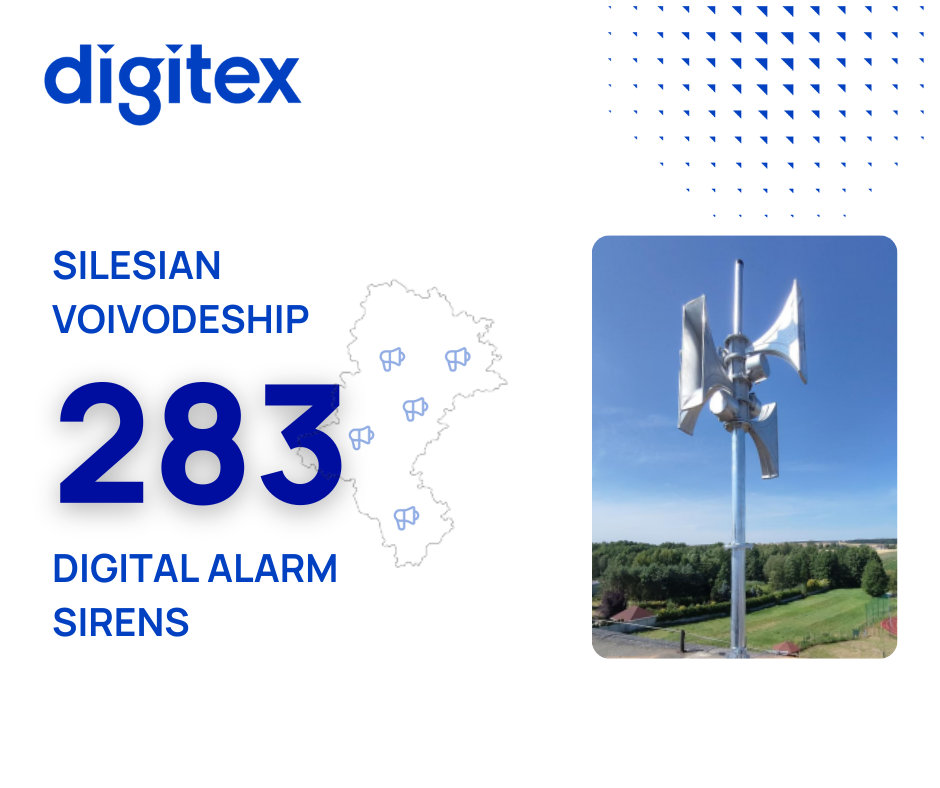
In 2025, Digitex, acting as the main contractor, completed one of the key modernization projects of the Public Warning and Alerting System (SOiA) in the Silesian Voivodeship. The project was implemented under the National Recovery Plan (KPO) and the Ministry of the Interior and Administration (MSWiA) program “Crisis Resilience”.
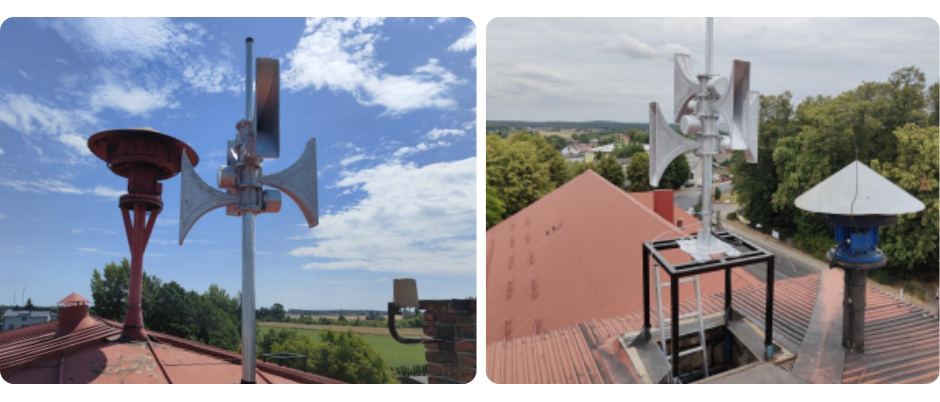
The Silesian Voivodeship, as a region with a high population density and extensive industrial infrastructure, requires reliable and immediate warning tools in situations involving natural and technological hazards. The objective of the project was a comprehensive modernization of the alarm system, including the replacement of analog solutions with modern digital alarm sirens.
The key challenges included:
- ensuring high system reliability under all operating conditions,
- maintaining uninterrupted operation during power outages,
- integration with the existing State Fire Service (PSP) infrastructure,
- execution of a large number of installations within a short and strictly defined schedule.
Scope of the project
The scope of the project included the delivery, installation, commissioning and technical acceptance of a total of 283 digital alarm sirens, compliant with the current technical requirements of the National Headquarters of the State Fire Service (KG PSP) and KPO standards.
The project was delivered using a partner-based model, with Digitex assuming full responsibility for coordination, system integration and the final technical outcome.
As part of the project, the following activities were carried out:
- delivery of 283 Digitex digital alarm sirens,
- coordination of four tender packages,
- supervision of installation and system commissioning,
- integration with PSP control and command systems,
- functional testing and final acceptance procedures.
Installation works at individual locations were performed by certified Digitex installation partners:
- Sinad S.C.,
- Tetratronik,
- AltomProf.
Digitex played the leading technological and organizational role, ensuring solution consistency, system configuration and the overall quality of the deployment.
Digitex technology applied in the KPO standard
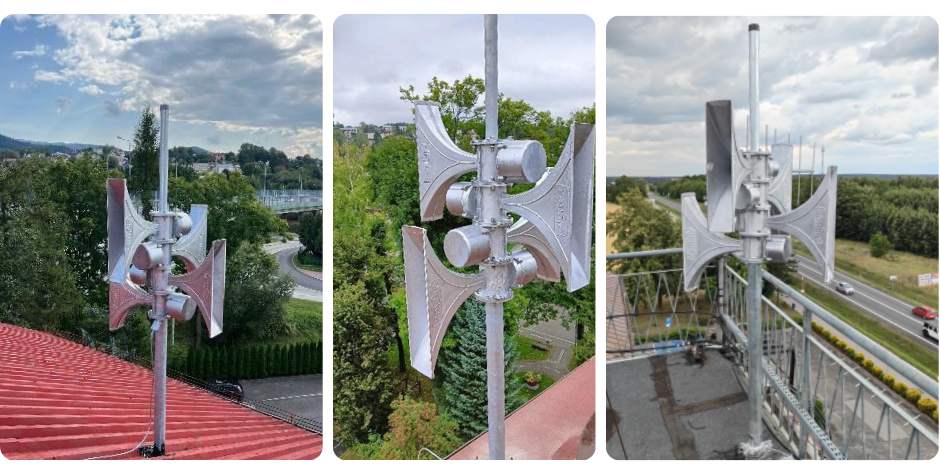
All installed Digitex sirens comply with the technical requirements of KPO and the Terms of Reference (OPZ), including, among others:
- system acoustic power of 600 W, ensuring high SPL levels and wide-area coverage,
- full – capacity 230 V AC power supply with surge protection,
- redundant backup power supply: 2 × 75 Ah AGM batteries,
- DUPS-40 redundant power module,
- local and remote control (DSP-50, GSM),
- external GSM antenna 2 dBi (2.5 m cable),
- equipped with a DML control panel with a display, allowing full configuration and access to all alarm siren functionalities,
- enclosures and mechanical components compliant with KPO standards (steel housing, doors, anti-corrosion protection),
- full compliance of alarm signals with KG PSP and MSWiA guidelines,
- 48-month warranty.
The system was designed for continuous, year-round operation, maintaining resistance to adverse weather conditions and ensuring long infrastructure lifespan.
Implementation results in the Silesian Voivodeship
The implementation of the project in the Silesian Voivodeship delivered measurable benefits:
- a significant increase in the effectiveness of public warning and alerting,
- reduced response time of emergency services,
- ensured system continuity even during prolonged power outages,
- full compliance with KPO requirements and current safety standards,
- unification of alarm infrastructure at the regional level.
The Digitex system enables both local and remote control, automatic testing and continuous monitoring of operational status, directly enhancing the safety of the region’s residents.
The project in the Silesian Voivodeship is an example of a successful and comprehensive deployment of modern alarm systems, in which Digitex acted as the technology manufacturer, main contractor and system integrator.
The implemented infrastructure provides a solid foundation for the further development of regional and nationwide warning systems, while the experience gained serves as a reference point for future deployments.